


Warwick sits where the Simonsberg meets its smaller outcrop, Klapmutskop. This mountainous area forms part of the Greater Simonsberg Conservancy, a partnership between local wine farms set up to protect the fynbos and renosterveld growing here.
Fynbos is the fine-leaved, highly fire-adapted vegetation unique to the Cape Floristic Region. It's the smallest of the world's six floral kingdoms and the only one found entirely within a single country. It holds close to 10 000 plant species, most of which grow nowhere else on Earth.
Each season, we collect a few cuttings from the Conservancy area, propagate them, and then plant them back all over the property. This amounts to thousands of baby plants every year. It's part of how Warwick stays farmed and wild at the same time. It's also part of why the WWF named Warwick a Conservation Champion.
Here are some of the species you can find on the farm:
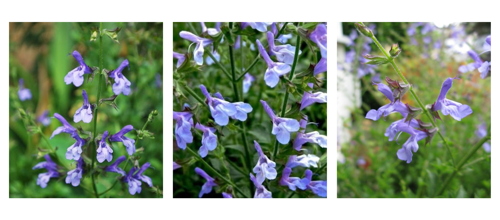
Blue African Sage (Salvia africana)
Family: Lamiaceae (the mint/sage family)
Common names: Blue African sage, wild sage, blousalie, wildesalie
Description: A soft, grey-hairy shrub up to 2m with blue-and-white flowers that look like they're gaping open - because they are. Crush a leaf and you'll get a proper sage smell.
Conservation Status: Not threatened - this one's thriving.
Distribution and Habitat: Sandy fynbos slopes from Namaqualand down to the Cape Peninsula and Caledon.
Ecology: The flower is a mechanical trap for bees: a hinged "pedal" inside the bloom forces the anther down onto a bee's back as it reaches for nectar, stamping it with pollen. Pure engineering.
Uses and special features: Dutch settlers at the Cape used this as their sage substitute and brewed it into a cure-all tea for coughs, colds and stomach troubles - it was even shipped back to be grown in European physic gardens in the 1700s. Drought-resistant, fragrant, feeds honeybees.
Read more: https://pza.sanbi.org/salvia-africana
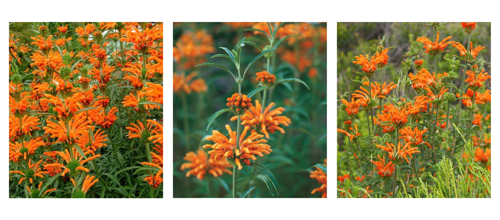
Lion’s Ear (Leonotis leonurus)
Family: Lamiaceae
Common names: Wild dagga, lion's ear, wildedagga
Description: A tall, architectural shrub (2–3m) with whorls of fuzzy orange flowers stacked up the stem like tiered candlesticks. The furry flower lip is what earns it "lion's ear."
Conservation Status: Least Concern - common and widespread.
Distribution and Habitat: Found right across South Africa, from rocky grassland to forest edges, sea level to almost 2000m.
Ecology: Sunbirds queue for the nectar, ants disperse the seeds (drawn by oil glands on the seed coat), and it's a larval food plant for the Bush Bronze butterfly.
Uses and special features: Despite the name, it's not cannabis - it's a legal, unrelated plant that's been smoked or brewed as a mild, non-narcotic substitute since colonial times, with reported effects ranging from mild light-headedness to nausea (drink the tea instead). Children traditionally suck the sweet nectar straight from the flowers. Attracts birds and butterflies, used medicinally for everything from snakebite to asthma.
Read more: https://pza.sanbi.org/leonotis-leonurus
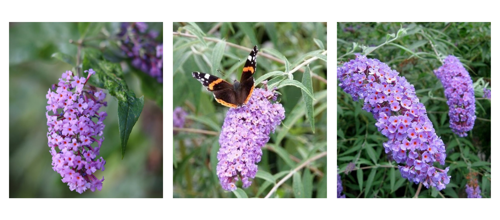
Butterfly Bush (Buddleja salviifolia)
Family: Scrophulariaceae
Common names: Sagewood, butterfly bush, saliehout
Description: A large, semi-evergreen shrub or small tree with crinkled, sage-like leaves and dense sprays of sweetly scented white-to-purple flowers in spring.
Conservation Status: Least Concern.
Distribution and Habitat: Widespread from the Western Cape through the escarpment into tropical Africa - forest margins, rocky hillsides, stream banks.
Ecology: A magnet for bees, butterflies and birds when in bloom - one of the better "wildlife" plants in a garden.
Uses and special features: The species name literally means "sage-leaved," after its resemblance to Salvia. Leaves are brewed into an aromatic herbal tea, and traditional remedies use a root decoction for coughs and a leaf infusion as an eye lotion. Makes an excellent hedge and is fragrant enough to notice from a distance.
Read more: https://pza.sanbi.org/buddleja-salviifolia
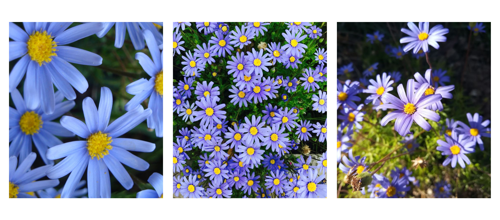
Dune Daise (Felicia echinata)
Family: Asteraceae
Common names: Dune daisy, prickly felicia, bloublommetjie
Description: A low, glossy-leaved shrub whose leaves have tiny spiked, white-toothed edges - hence echinata, Latin for "covered in prickles." Mauve (occasionally white) daisies bloom for months.
Conservation Status: Least Concern.
Distribution and Habitat: Coastal dunes and roadsides from Mossel Bay to Port Alfred.
Ecology: The prickly leaf margins are thought to be a deterrent to grazers - a daisy in armour.
Uses and special features: A tough, water-wise garden filler that softens the look of large aloes and vygies planted nearby. Attracts butterflies and feeds honeybees.
Read more: https://pza.sanbi.org/felicia-echinata
Wild Aster (Felicia filifolia subsp. filifolia)
Family: Asteraceae
Common names: Wild aster, fine-leaved felicia, draaibos
Description: A rounded, twiggy shrub covered in fine, needle-like leaves and a spectacular mass of purple-to-white daisies in spring.
Conservation Status: Least Concern.
Distribution and Habitat: Extremely widely spread - Namibia to Namaqualand, the Karoo, the Free State and beyond - usually on rocky hillsides.
Ecology: A big draw for butterflies, bees and other pollinators, which in turn brings in insect-eating birds.
Uses and special features: Poisonous to sheep, which is an odd contrast to how popular it is in gardens as a hardy, drought-tolerant hedge or border plant. Traditionally used as firewood in rural areas.
Read more: https://pza.sanbi.org/felicia-filifolia-subsp-filifolia
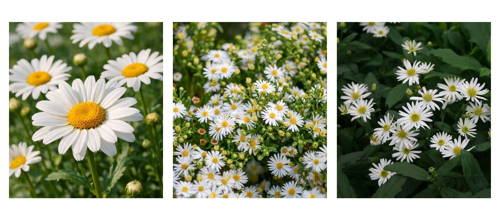
Botterblom (Gazania krebsiana)
Family: Asteraceae
Common names: Terracotta gazania, gousblom, botterblom
Description: A low, mat-forming groundcover with big, showy orange-red flowerheads marked with dark patterns near the centre.
Conservation Status: Not currently of concern, though some Namaqualand populations have been hit hard by overgrazing.
Distribution and Habitat: Extremely widespread across South Africa's winter-rainfall regions - roadsides, rocky outcrops, dunes.
Ecology: The dark markings on the petals mimic the shape of monkey beetles - like an empty "singles bar" sign that lures real monkey beetles in to mate, pollinating the flower in the process.
Uses and special features: The Afrikaans name botterblom ("butter flower") comes from a local belief that the petals taste like butter when chewed. A parent species behind many of the Gazania hybrids sold in nurseries today. Good pioneer/soil-stabilising plant, feeds honeybees.
Read more: https://pza.sanbi.org/gazania-krebsiana
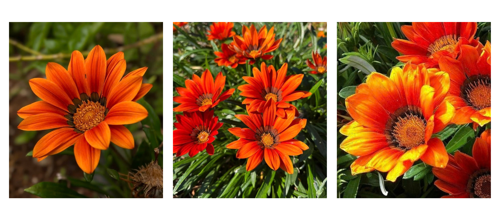
Orange Doll’s Rose (Hermannia pinnata)
Family: Malvaceae
Common names: Orange Doll's Rose, orange hermannia, poprosie
Description: A fast, mat-forming groundcover with nodding, honey-scented pale-orange bell flowers that open from a much darker reddish-orange bud.
Conservation Status: Not threatened.
Distribution and Habitat: Sandy coastal flats and dunes on the West Coast, from Velddrif to the Cape Peninsula.
Ecology: Worked heavily by bees for its honey-scented nectar.
Uses and special features: The "Doll's Rose" name comes from the way the petals twist as they open, making the flower look like a tiny rose — irresistible in a hanging basket or on a retaining wall. Fragrant, drought-resistant, and a good pioneer plant for disturbed ground.
Read more: https://pza.sanbi.org/hermannia-pinnata
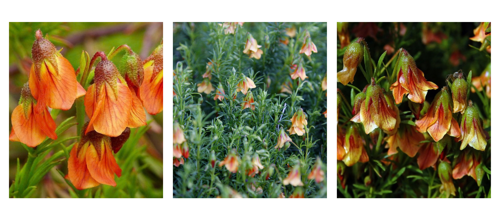
Wild Fuchsia (Halleria elliptica)
Family: Stilbaceae
Common names: Wild fuchsia, rock tree-fuchsia, kinderbessie
Description: A shrub or small tree with pendulous, tubular orange flowers that genuinely do look like fuchsias, followed by juicy black berries.
Conservation Status: Least Concern.
Distribution and Habitat: Western Cape only - mixed bush and forest margins, often near streams, from the Cedarberg to Swellendam.
Ecology: Rich in nectar, so it pulls in sunbirds, bees and butterflies; cattle, goats and game browse the leaves too.
Uses and special features: Its Afrikaans name kinderbessie means "children's berry" - the sweet black fruit is a favourite with children (and adults; it can be made into a jelly). Good hedge/screen plant, tolerant of full shade.
Read more: https://pza.sanbi.org/halleria-elliptica
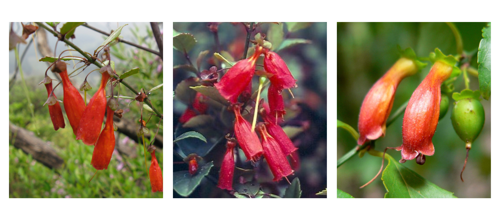
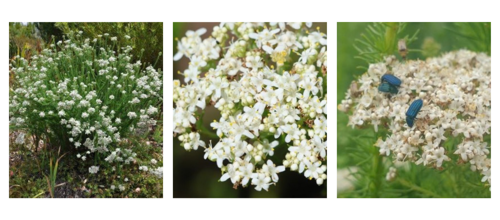
Bitter Blombos (Selago corymbosa)
Family: Scrophulariaceae
Common names: Bitter blombos, poverty bush, bitterblombos
Description: A dainty, densely leafy shrub covered in tiny white flowers clustered into flat-topped heads - corymbosaliterally means "arranged in a corymb (cluster)."
Conservation Status: Least Concern.
Distribution and Habitat: Stony slopes and exposed coastal cliffs, Cape Peninsula through to the Baviaanskloof.
Ecology: A pioneer species - one of the first plants to move into disturbed or overgrazed ground, and it can resprout after fire.
Uses and special features: Despite the "bitter" in its name suggesting medicine, there's no confirmed traditional use beyond a reputed treatment for skin infections. Mostly grown simply because bees, beetles and butterflies can't get enough of it.
Read more: https://pza.sanbi.org/selago-corymbosa
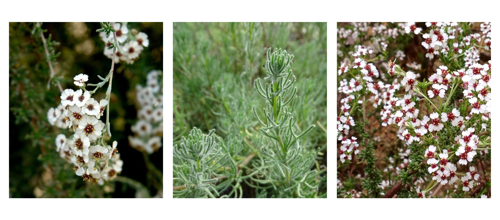
Wild Rosemary (Eriocephalus africanus)
Family: Asteraceae
Common names: Wild rosemary, wilderoosmaryn, kapokbos
Description: A silvery, needle-leafed shrub that looks and smells vaguely like rosemary (crush the leaves - the scent is closer to Vicks VapoRub).
Conservation Status: Common, not threatened.
Distribution and Habitat: Clay and granite slopes across the Western Cape, Eastern Cape and Namaqualand.
Ecology: After flowering, seed heads turn fluffy and white - giving rise to the Afrikaans name kapokbos ("snow bush"), since kapok means snow/down.
Uses and special features: A genuine folk remedy - brewed as a tea for coughs, colic and as a diuretic, and used in the bath as a hair conditioner and skin tonic. Also used in cooking and pot-pourri. An extensive root system (a taproot reaching 6m down) makes it remarkably drought- and grazing-resistant.
Read more: https://pza.sanbi.org/eriocephalus-africanus
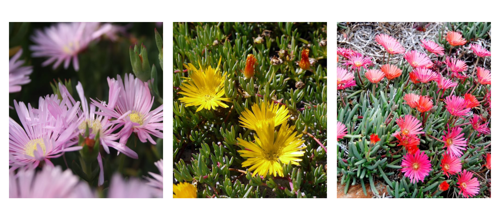
Vygie (Lampranthus sp.)
Family: Aizoaceae (the succulent "mesemb" family)
Common names: Vygie (a name applied to dozens of Lampranthus species - golden vygie, kransvygie, matvygie, bont vygie, purple vygie, and more)
Since "vygie" covers a whole genus rather than one species, this entry is a group portrait rather than a single profile - nine Lampranthus species come up in South African plant records, each named for a colour or habit (aureus = golden, bicolor = two-toned, roseus = rose-pink).
Description: Low, spreading succulent shrublets that carpet rocky ground in blazing colour when they flower - the classic Cape "vygie" carpet effect.
Conservation Status: Generally not threatened; several are common garden and veld plants.
Distribution and Habitat: Overwhelmingly a winter-rainfall, Western/Northern Cape phenomenon - rocky slopes, kloofs and sandy flats.
Ecology: Flowers are famously fussy about the weather - most vygie flowers only open in full sun and snap shut on cloudy days or at night, conserving pollen for when bees and beetles are actually flying.
Uses and special features: The name Lampranthus comes from the Greek for "bright flower," and it's not an exaggeration - mass plantings are used specifically because a hillside of vygies in bloom is one of the most photographed sights in the Cape flora calendar. Good groundcover, low water need.
Read more (list of species): https://pza.sanbi.org/plants/search/advanced?pow_page=genus&name=Lampranthus&title_sort=ASC
By Christiana von Arnim